Clinical Services
General Practitioner Consultations
Preceding qualitative investigations of nurse practitioner consultations have, when conducting interviews with participants, often exclusively sampled either nurse practitioners or patients. Furthermore, previous qualitative studies of the nature of nurse practitioner consultations have not typically also sampled carers attending with patients for nurse practitioner consultations. Accordingly this study was developed, in part, to address this exclusivity of sampling in qualitative research of nurse practitioner consultations by developing an inclusive sample of patient, carer and nurse practitioner participants of nurse practitioner consultations, so as to conjointly develop an understanding of the multiple perceptions of those participants of communication processes occurring in nurse practitioner consultations.
General Nursing Care
The common thread uniting different types of nurses who work in varied areas is the nursing process—the essential core of practice for the registered nurse to deliver holistic, patient-focused care
Assessment
An RN uses a systematic, dynamic way to collect and analyze data about a client, the first step in delivering nursing care. Assessment includes not only physiological data, but also psychological, sociocultural, spiritual, economic, and life-style factors as well. For example, a nurse’s assessment of a hospitalized patient in pain includes not only the physical causes and manifestations of pain, but the patient’s response—an inability to get out of bed, refusal to eat, withdrawal from family members, anger directed at hospital staff, fear, or request for more pain mediation
Diagnosis
The nursing diagnosis is the nurse’s clinical judgment about the client’s response to actual or potential health conditions or needs. The diagnosis reflects not only that the patient is in pain, but that the pain has caused other problems such as anxiety, poor nutrition, and conflict within the family, or has the potential to cause complications—for example, respiratory infection is a potential hazard to an immobilized patient. The diagnosis is the basis for the nurse’s care plan.
Outcomes / Planning
Based on the assessment and diagnosis, the nurse sets measurable and achievable short- and long-range goals for this patient that might include moving from bed to chair at least three times per day; maintaining adequate nutrition by eating smaller, more frequent meals; resolving conflict through counseling, or managing pain through adequate medication. Assessment data, diagnosis, and goals are written in the patient’s care plan so that nurses as well as other health professionals caring for the patient have access to it.
Implementation
Nursing care is implemented according to the care plan, so continuity of care for the patient during hospitalization and in preparation for discharge needs to be assured. Care is documented in the patient’s record.
Evaluation
Both the patient’s status and the effectiveness of the nursing care must be continuously evaluated, and the care plan modified as needed.
Minor Surgical Procedures
The Department of Surgery at Ekuphileni Clinic has an outstanding national reputation and long-established tradition of surgical excellence across a full spectrum of adult and pediatric surgical services. Some of the world's leading surgeons are performing the most delicate and complex surgeries with overwhelmingly positive outcomes. Dr Sibanda, MD, Surgeon-in-Chief and Chairman of the Department of Surgery, has built on Montefiore's surgical history by assembling an unparalleled team of specialists. Together, they provide patients with the complete spectrum of innovative cancer treatments and minimally invasive surgical options. 'The creation of new knowledge through innovative research, and the ability to share this with patients through clinical trials is the cornerstone of our surgical program,' notes Dr. Sibanda.
Physiotherapy & Rehabilitative Services
At our clinic, we are dedicated to helping you regain mobility, reduce pain, and improve your overall quality of life. Our team of experienced physiotherapists provides a wide range of treatments tailored to meet your individual needs.
Physiotherapy services available:
- Manual Therapy: Hands-on techniques to relieve pain and improve mobility, including joint mobilization and soft tissue manipulation.
- Exercise Therapy: Customized exercise programs are designed to strengthen muscles, improve flexibility, and enhance overall physical function. Exercise.
- Electrotherapy: Utilization of modalities such as ultrasound, TENS (Transcutaneous Electrical Nerve Stimulation), and electrical stimulation to manage pain and promote healing
- Post-Surgical Rehabilitation: Specialized recovery programs to help you regain strength and function after surgery.
- Sports Rehabilitation: Focused therapy for athletes to recover from injuries and enhance performance through tailored rehabilitation plans.
- Pelvic Health Physiotherapy: Assessment and treatment for pelvic pain, incontinence, and other pelvic-related conditions.
- Geriatric Physiotherapy: Support for elderly patients to improve mobility, balance, and independence.
- Paediatric Physiotherapy: Focused on assessing and treating children to enhance their movement, coordination, and overall physical development.
- Dry Needling: A technique involving fine needles to target trigger points and relieve muscular pain and tension.
- Traction Therapy: Mechanical or manual traction is used to relieve pressure on the spine and alleviate pain.
Our physiotherapists are trained to treat a variety of conditions, including but not limited to:
- Back and neck pain
- Arthritis and joint pain
- Sports injuries
- Post-surgical recovery
- Stroke/ head injury rehabilitation
- Chronic pain syndromes
- Tendonitis and bursitis
- Neurological conditions
- Urinary incontinence
- Chest conditions
Group Therapies
Group therapy in physiotherapy involves guided treatment sessions conducted in a supportive group environment. Led by our experienced physiotherapists, these sessions are designed to promote healing, motivation, and functional recovery through targeted exercises and peer support.
Participating in group therapy offers a range of benefits:
- Encourages social interaction and emotional support
- Enhances motivation and consistency
- Offers cost-effective access to physiotherapy
- Promotes shared progress and community healing
Please note: All therapies offered in group settings are also available as one-on-one sessions for individuals who prefer personalized care. Individual sessions are tailored specifically to your needs and are available at a separate fee.
Our Current Group Classes:
1. Antenatal & Postnatal Physiotherapy Classes
These classes are specially designed to support women through the physical changes of pregnancy and postpartum recovery.
Antenatal Care Includes:
- Birth preparation exercises
- Back care techniques
- Breathing exercises
- Posture education and ergonomic advice
- Relaxation techniques to reduce stress and tension
Postnatal Care Includes:
- Pelvic floor and abdominal strengthening exercises
- Gentle back care routines
- Diastasis recti correction
- Postpartum weight loss and conditioning exercises
- These sessions provide essential guidance during a transformative time, promoting a healthy pregnancy and a safe, effective recovery post-birth.
2. Stroke Rehabilitation Group
This program is tailored for individuals recovering from a stroke and focuses on rebuilding function through structured group exercises.
Goals of the Program:
- Improve fine and gross motor skills
- Strengthen weak upper and lower limbs
- Enhance mobility and walking ability
- Improve balance and coordination
Our stroke group provides a supportive setting for patients to regain independence and confidence, while benefiting from the shared experiences of others on a similar journey.
Group Therapies
Group therapy in physiotherapy involves guided treatment sessions conducted in a supportive group environment. Led by our experienced physiotherapists, these sessions are designed to promote healing, motivation, and functional recovery through targeted exercises and peer support.
Participating in group therapy offers a range of benefits:
- Encourages social interaction and emotional support
- Enhances motivation and consistency
- Offers cost-effective access to physiotherapy
- Promotes shared progress and community healing
Please note: All therapies offered in group settings are also available as one-on-one sessions for individuals who prefer personalized care. Individual sessions are tailored specifically to your needs and are available at a separate fee.
Our Current Group Classes:
1. Antenatal & Postnatal Physiotherapy Classes
These classes are specially designed to support women through the physical changes of pregnancy and postpartum recovery.
Antenatal Care Includes:
- Birth preparation exercises
- Back care techniques
- Breathing exercises
- Posture education and ergonomic advice
- Relaxation techniques to reduce stress and tension
Postnatal Care Includes:
- Pelvic floor and abdominal strengthening exercises
- Gentle back care routines
- Diastasis recti correction
- Postpartum weight loss and conditioning exercises
- These sessions provide essential guidance during a transformative time, promoting a healthy pregnancy and a safe, effective recovery post-birth.
2. Stroke Rehabilitation Group
This program is tailored for individuals recovering from a stroke and focuses on rebuilding function through structured group exercises.
Goals of the Program:
- Improve fine and gross motor skills
- Strengthen weak upper and lower limbs
- Enhance mobility and walking ability
- Improve balance and coordination
Our stroke group provides a supportive setting for patients to regain independence and confidence, while benefiting from the shared experiences of others on a similar journey.
Paediatric Physiotherapy
- Tailored care for infants, children, and teens
- Treats developmental delays, poor coordination, and neurological conditions
- Play-based therapy to improve strength, balance, and mobility
- Supportive, child-friendly environment
Radiological Diagnostic Services
Computed Tomography (CT Scan)
Computed Tomography scanner is a modality that uses X-rays and takes a series of images of the body part that is being examined. The images are taken from different angles in slices and can be reconstructed into 3D. It is very useful in evaluating injuries e.g. bone fractures, blood vessels and pinpointing the location of masses and tumours in the body.
Mammography
This is an x-ray machine that produces a small burst of x-rays to visualize the breast tissue. It is less harmful as lower doses of radiation are used in producing 2D images and 3D tomosynthesis. Early stages of breast cancer and breast abnormalities are quickly detected with a mammogram.
MRI Scan
Magnetic resonance imaging is a type of scanner that uses a strong magnetic field and radio waves to produce detailed images of a specific body structure. Studies have proven that it is the gold standard to visualize soft tissue, tendons, ligaments, joint and the nervous system (brain and spine cord).
Ultrasonography
Captures images using high-frequency sound waves in assessing internal organs in real-time. Ultrasound imaging is mostly associated with pregnant women while in essence it also evaluates the male pelvis, abdominal organs, heart, musculoskeletal and blood vessels.
X-Rays & Fluoroscopy
This is the most common modality used in radiology. It produces electromagnetic radiation that penetrates the body structure and creates images on a photographic film /fluorescent screen. X-rays are painless and detect broken bones, some dental abnormalities and presence of foreign bodies. Real-time dynamic images can also be obtained using fluoroscopy in evaluating gastro-intestinal tract, fallopian tubes and the urinary system by introducing contrast agent (dye).
Electroencephalography (EEG) Services
Long-Term & Short-Term EEG Studies

What we use an EEG for
An electroencephalogram (EEG) is a test that detects electrical activity in the brain using small metal discs (electrodes) attached to the head. EEG results show changes in brain activity that may be useful in diagnosing brain conditions especially epilepsy and other seizure disorders.
Your appointment letter will mention anything you need to do to prepare for the test. Unless told otherwise, you can usually eat and drink beforehand and continue to take all your normal medication. To help the sensors stick to your scalp more easily, you should make sure your hair is clean and dry before arriving for your appointment, and avoid using products such as hair gel and wax. You might want to bring a hairbrush or comb with you, as your hair may be a bit messy when the test is finished. Some people bring a hat to cover their hair until they can wash it at home afterwards.
During the test, small sensors are attached to the scalp to pick up the electrical signals produced when brain cells send messages to each other. These signals are recorded by a machine and are looked at by a doctor later to see if they're unusual.
Ekuphileni Clinic Pharmacy
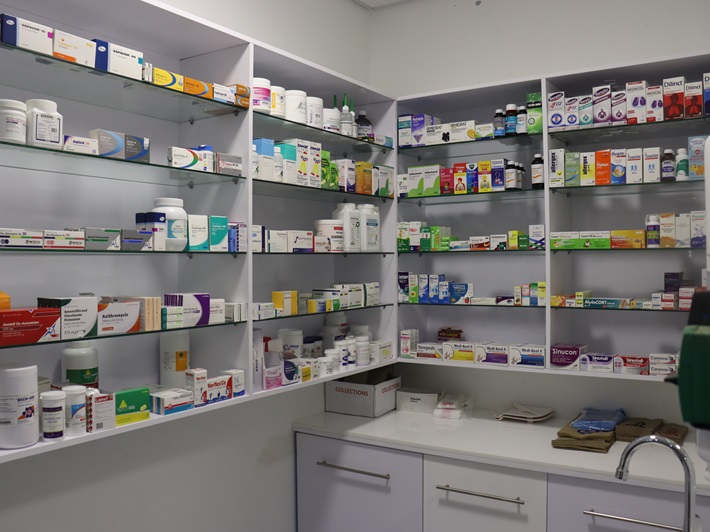
At our clinic, we are proud to offer an in-house pharmacy that provides convenience and quality care to our patients. Our pharmacy features a wide range of medications, all available at competitive market rates. Our knowledgeable pharmacists are committed to ensuring that you receive the right medications tailored to your health needs.
With our focus on patient-centered care, we strive to make your experience seamless and efficient. Visit our in-house pharmacy for all your medication needs and enjoy the added convenience of receiving your prescriptions right where you receive your healthcare.